
What Should You Do First in SEO? A Simple Priority Framework for New Websites
One of the most common challenges in SEO is not knowing where to begin.
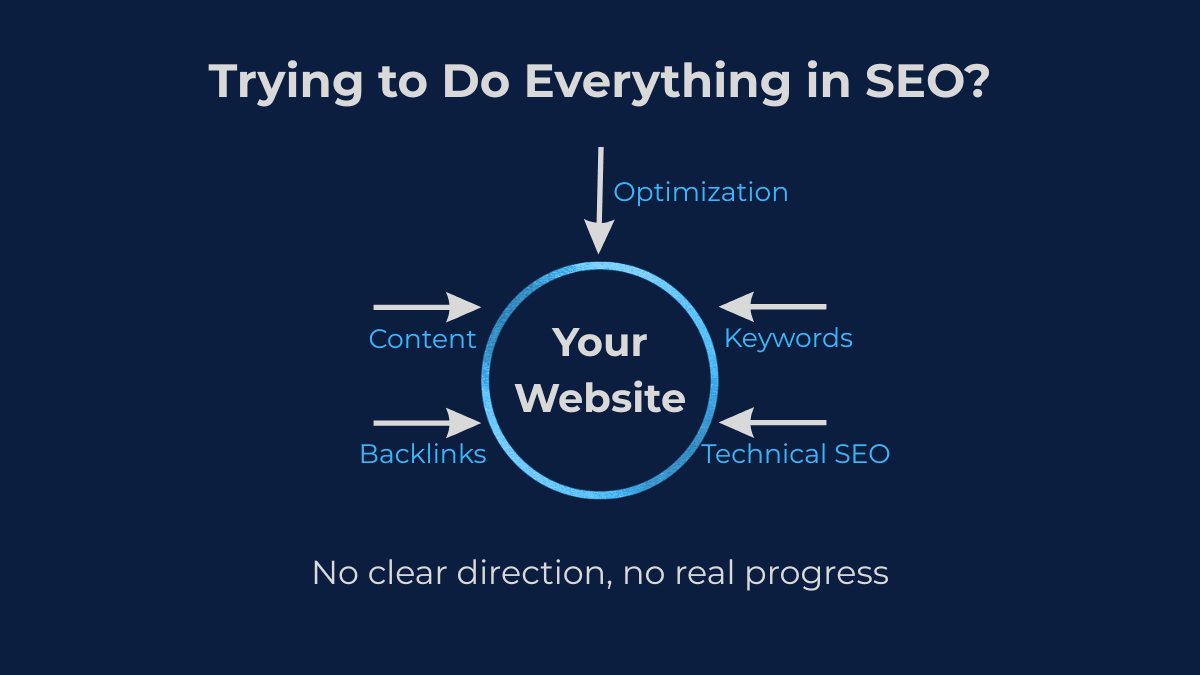
There are too many things to do. Content, keywords, backlinks, technical fixes. It often feels like everything is important, and that creates confusion.
When everything feels important, it becomes difficult to decide what actually matters first.
In most cases, SEO does not fail because of lack of effort. It slows down because the effort is not directed in the right order.
Why SEO Feels Confusing in the Beginning
When starting out, most people try to do everything at once.
They publish content, optimize pages, look for backlinks, and keep checking rankings, all at the same time.
This creates activity, but not always clarity.
Search engines do not evaluate isolated actions. They look for patterns, structure, and consistency over time.
If this foundation is not clear, even good efforts can take longer to show results.
This is also why SEO can feel unpredictable in the beginning, as I explained in why SEO results look random at first.
The Mistake of Trying to Do Everything Early
It is natural to think that doing more will bring faster results.
In reality, doing too much too early often creates noise instead of progress.
Without a clear direction, actions do not reinforce each other.
This is one of the reasons why SEO can slow down even when effort is high, something I have explained in why doing more SEO too early can slow down rankings.
SEO works better when steps are connected, not scattered.
A Simple SEO Priority Framework
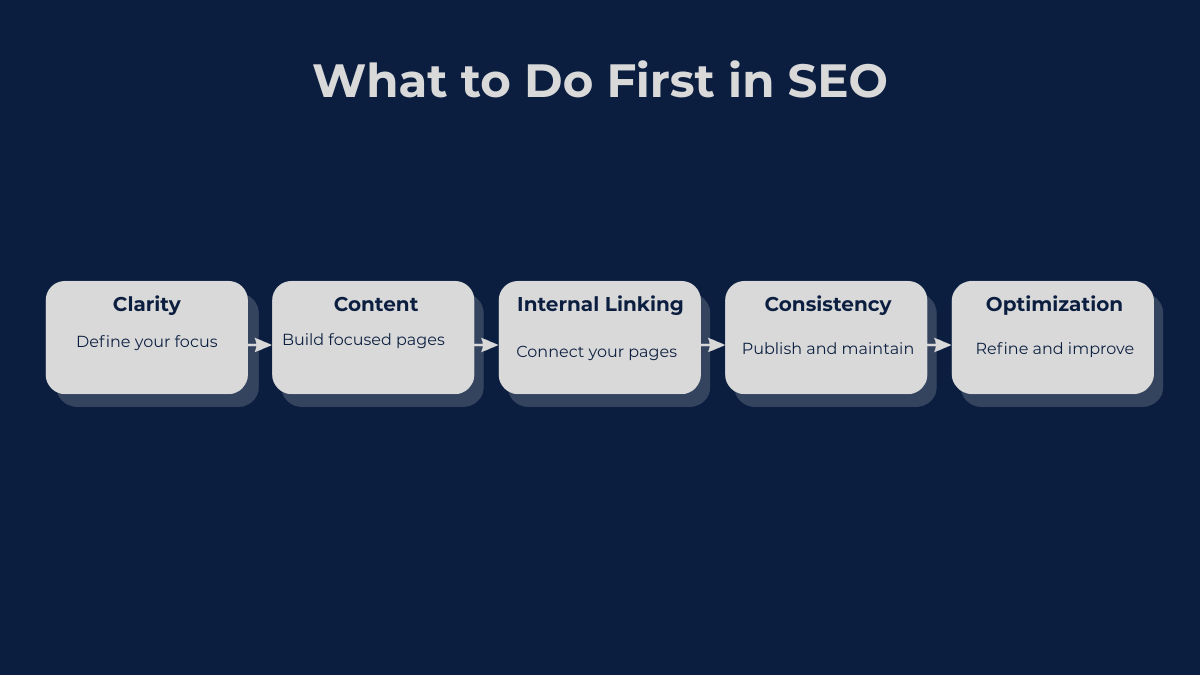
Instead of trying to do everything, it helps to follow a structured order.
This makes it easier for search engines to understand your website and evaluate it more efficiently.
Here is a simple way to approach it.
1. Start with Clarity
Before anything else, define what your website is about.
Focus on a clear topic or group of related topics. This helps search engines understand your direction.
Without clarity, everything else becomes harder to evaluate.
2. Build Focused Content
Create pages that cover your core topics in a structured way.
Each page should have a clear purpose and should connect naturally with other pages.
This builds context across your website.
3. Connect Your Pages
Internal linking helps search engines follow relationships between topics.
It also strengthens the overall structure of your site.
In many cases, this alone improves how quickly your content is understood.
4. Stay Consistent
Publishing regularly and maintaining structure builds trust over time.
Search engines rely on repeated signals, not one-time activity.
This is also why some websites move faster than others, as I explained in why some websites rank faster than others in SEO.
5. Optimize After Structure Is Clear
Technical improvements, keyword refinements, and other optimizations work best after your foundation is stable.
When done too early, they often do not have the intended impact.
In simple terms, optimization supports clarity, it does not replace it.
What You Should Avoid in the Early Stage
Some actions can feel productive but do not always help in the beginning.
- Trying to rank for too many topics at once
- Making frequent changes without enough data
- Focusing only on rankings instead of structure
- Jumping between strategies without consistency
These actions often create confusion instead of progress.
A Practical Way to Think About SEO Priorities
SEO is not about doing everything. It is about doing the right things at the right time.
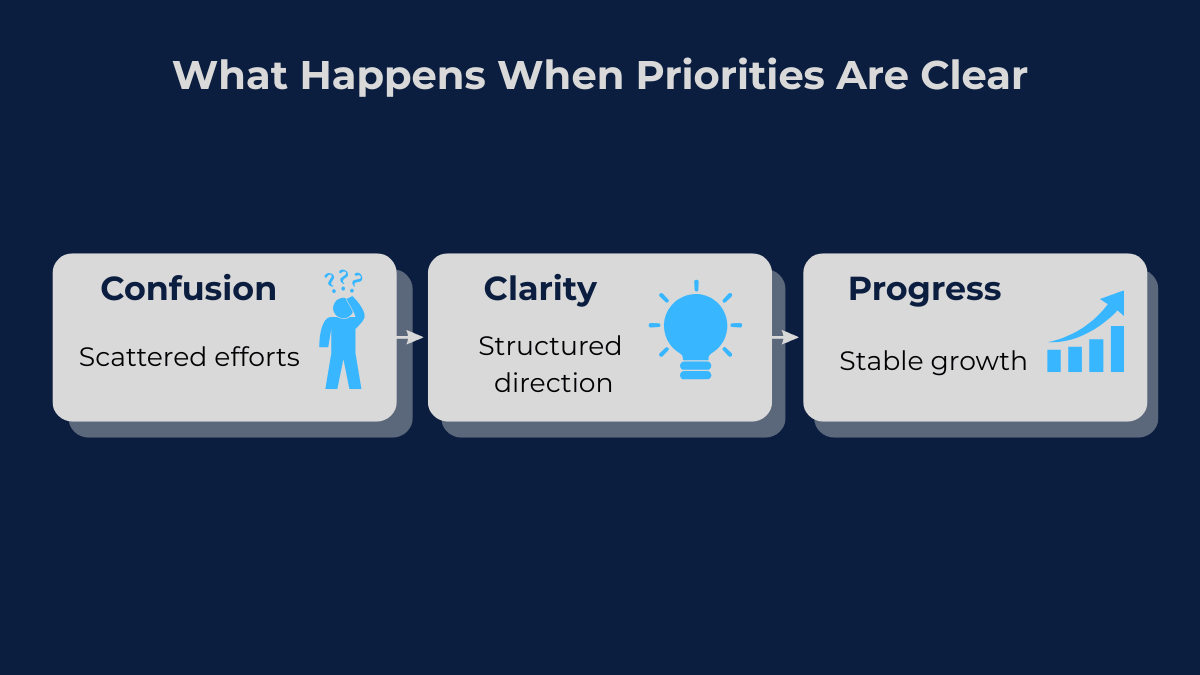
When your website becomes easier to understand, everything else starts to work better.
Progress becomes more stable, and results begin to make more sense.
If you are unsure whether your efforts are working, I have explained how to identify early signals in how to know if your SEO is working.
Final Thoughts
SEO becomes much easier when you focus on direction instead of volume.
Clarity, structure, and consistency create a foundation that search engines can trust.
Once that foundation is in place, improvements tend to follow more naturally.
If you are building a new website and want a structured approach instead of guessing what to do next, I also provide SEO support for businesses around Dehradun, where the focus is on building clarity first and growth after.
When priorities are clear, progress becomes easier to see and easier to sustain.