
Why Doing More SEO Too Early Can Slow Down Rankings
When a new website goes live, the most common instinct is to do more.
More content, more optimization, more changes, more fixes. I see this all the time, and I understand why it happens. SEO feels slow in the beginning, and when nothing seems to move, doing more feels like progress.
In reality, this early phase is where many websites accidentally slow themselves down. Not because SEO does not work, but because it is done too aggressively, too early.
Why New Websites Feel the Urge to Do More SEO
When a site is new, visibility is limited. Pages get indexed, impressions appear briefly, and then things go quiet.
This silence creates doubt. People start questioning their content, their keywords, their structure, or even SEO itself. As a response, they begin changing things repeatedly, hoping to trigger movement.
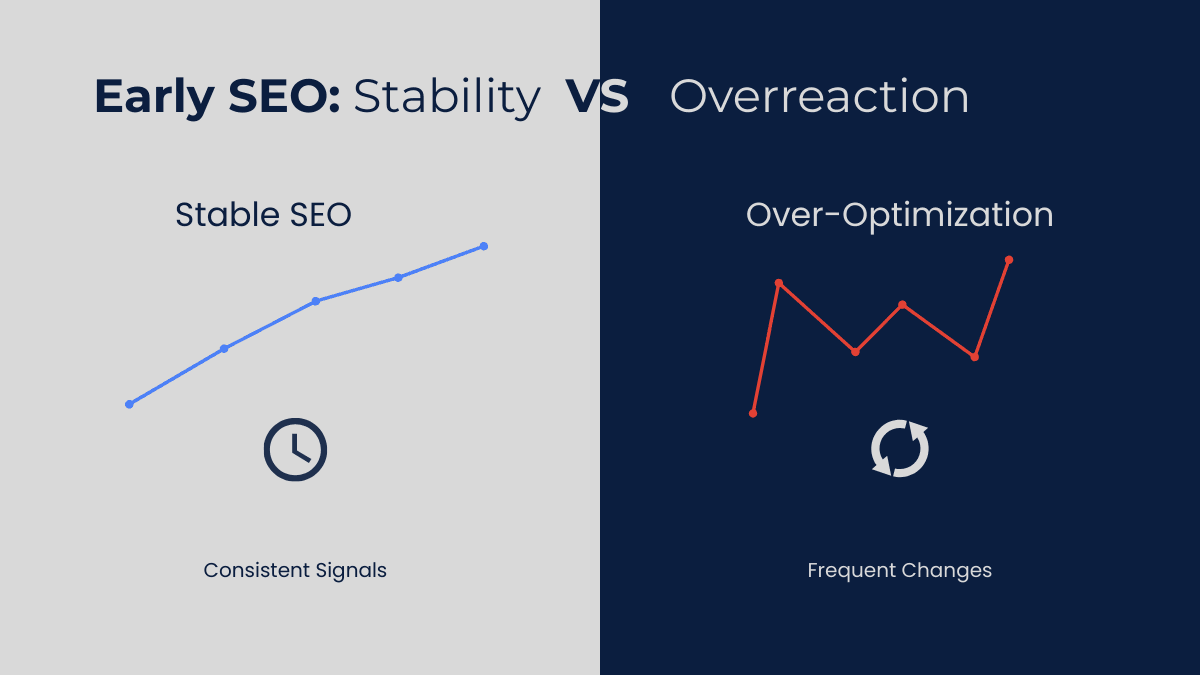
From the outside, it looks like effort. From Google’s side, it looks like instability.
If this behavior sounds familiar, I have explained in detail why SEO feels random at first and how early testing works.
What Google Is Actually Doing in the Early Phase
When Google discovers a new site, it does not immediately decide where that site belongs.
Instead, it observes. It looks at how pages are structured, how topics connect, and whether the site stays consistent over time. Small tests happen quietly, and data is collected slowly.
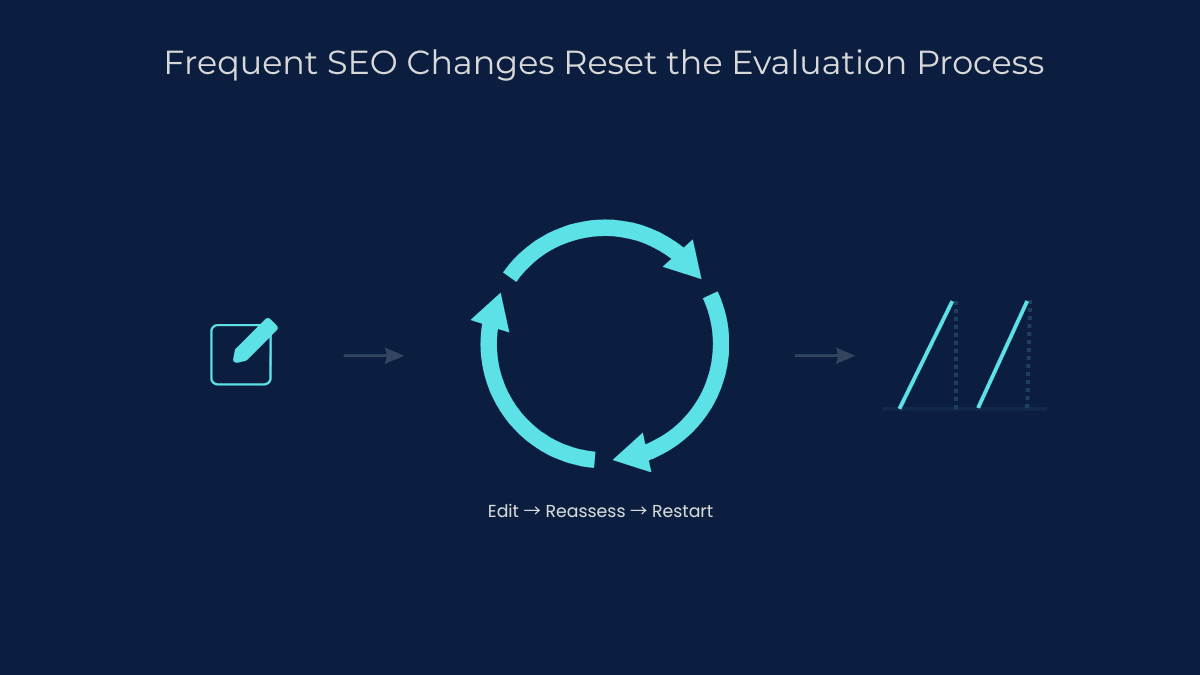
This process needs stability. When pages change too often, Google cannot build a reliable understanding. Signals get interrupted, and evaluation restarts.
This is why doing more SEO too early often delays clarity instead of speeding it up.
Common SEO Actions That Hurt When Done Too Early
Most of these actions are not wrong by themselves. The timing is what makes them harmful.
Constantly rewriting content
Updating content is good, but rewriting it every few weeks because rankings did not move is not. Each major change forces Google to reassess the page again, without letting previous signals settle.
Repeated title and meta changes
Titles and descriptions matter, but frequent changes confuse evaluation. Google needs time to see how a page performs with a stable setup.
Adding unnecessary sections and keywords
Stuffing pages with extra headings, FAQs, or keywords does not help early SEO. It often weakens clarity instead of improving relevance.
Overchecking performance
Checking rankings daily leads to emotional decisions. Early SEO does not move in straight lines, and reacting to every fluctuation creates churn.
Why Stability Matters More Than Optimization at First
In the beginning, Google is not asking whether your page is perfect.
It is asking whether your page is consistent.
Consistency helps Google understand intent, context, and topical focus. Optimization can come later, once that understanding is established.
I have seen many sites improve faster by changing less, not more.
What to Focus on Instead of Doing More SEO
Doing less does not mean doing nothing. It means doing the right things at the right time.
Instead of chasing constant changes, focusing on clear structure and fundamentals through professional SEO services creates better long-term outcomes.
Publish clear, helpful content
I focus on explaining topics properly, not optimizing them aggressively. Clarity beats cleverness early on.
Let pages sit long enough
I allow Google to observe pages over time. Evaluation needs data, and data needs time. This is why understanding how long SEO takes for a new website is important.
Improve gradually, not reactively
Small, thoughtful improvements over months work better than frequent large changes.
Build internal links naturally
I connect related content so Google can understand topic relationships, without forcing it.
When Doing More SEO Actually Makes Sense
There is a point where optimization becomes helpful.
This usually happens after Google has already understood your site’s direction. Visibility becomes more stable, patterns start forming, and pages stop disappearing randomly.
That is the phase where refining content, improving structure, and optimizing performance makes sense.
A Simple Way to Think About Early SEO
Early SEO is not about pushing harder. It is about staying steady.
Most ranking delays are not caused by lack of effort. They are caused by too much effort at the wrong time.
When SEO feels slow, it is usually not asking for more action. It is asking for patience.
Final Thoughts
Doing more SEO too early does not show commitment. It shows uncertainty.
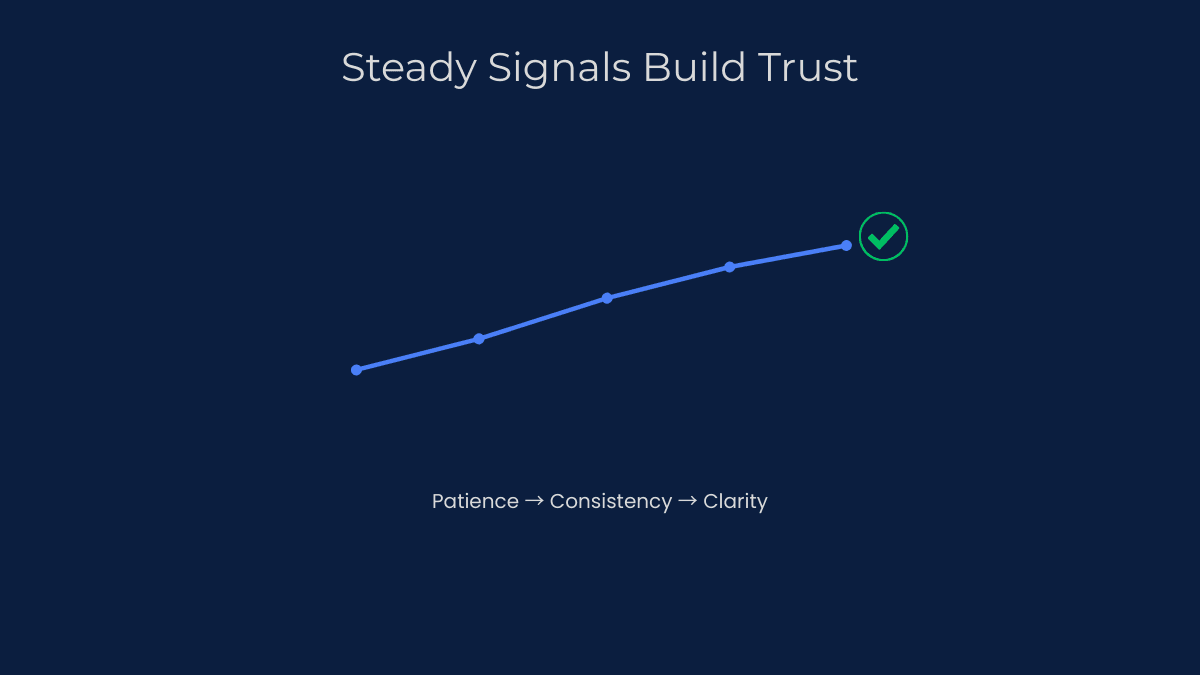
Search engines reward clarity, consistency, and stability over time. New websites that stay calm usually reach clarity faster than those that keep changing direction.
If your site is new and progress feels slow, that does not mean you need to do more. Sometimes, the best SEO move is to let your work speak long enough to be understood.