
Why Some Websites Rank Faster Than Others in SEO
One of the most common questions I come across in SEO is why some websites seem to rank quickly while others take months to see results.
It often feels inconsistent. Two websites may target similar topics, publish content around the same time, and still see very different outcomes.
In reality, this difference is not random. It is usually the result of how search engines evaluate trust, structure, and consistency over time.
Prefer a quick explanation? I’ve explained why some websites rank faster than others in SEO in the short video below.
In the sections below, I have explained the same concept in more detail so you can understand how it applies to your website.
Why SEO Progress Feels Uneven Across Websites
Not all websites start from the same position.
Some already have history, structure, and signals that search engines can rely on. Others are completely new and need to build that foundation from scratch.
From the outside, this looks like some sites are ranking faster. From Google’s perspective, it is simply responding to different levels of clarity and trust.
This is closely connected to how early SEO behaves. If you have seen rankings appear and disappear before stabilizing, I have explained that process in detail in why SEO results look random at first.

The Role of Website History and Existing Signals
Websites that have been active for a longer time often have an advantage.
They may already have indexed pages, internal links, and consistent publishing patterns. These signals help search engines understand the site more quickly.
In simple terms, older websites do not start from zero. They already have a level of familiarity with search engines.
New websites, on the other hand, need to build that understanding step by step.
Why Topical Clarity Speeds Up Rankings
Search engines do not just evaluate individual pages. They try to understand how topics connect across a website.
When a site consistently covers related topics, it becomes easier for Google to identify what that site is about.
In simple language, clarity across multiple pages builds stronger context than isolated content.
This is why websites with focused content often move faster than those publishing unrelated topics.
The Impact of Structure and Internal Linking
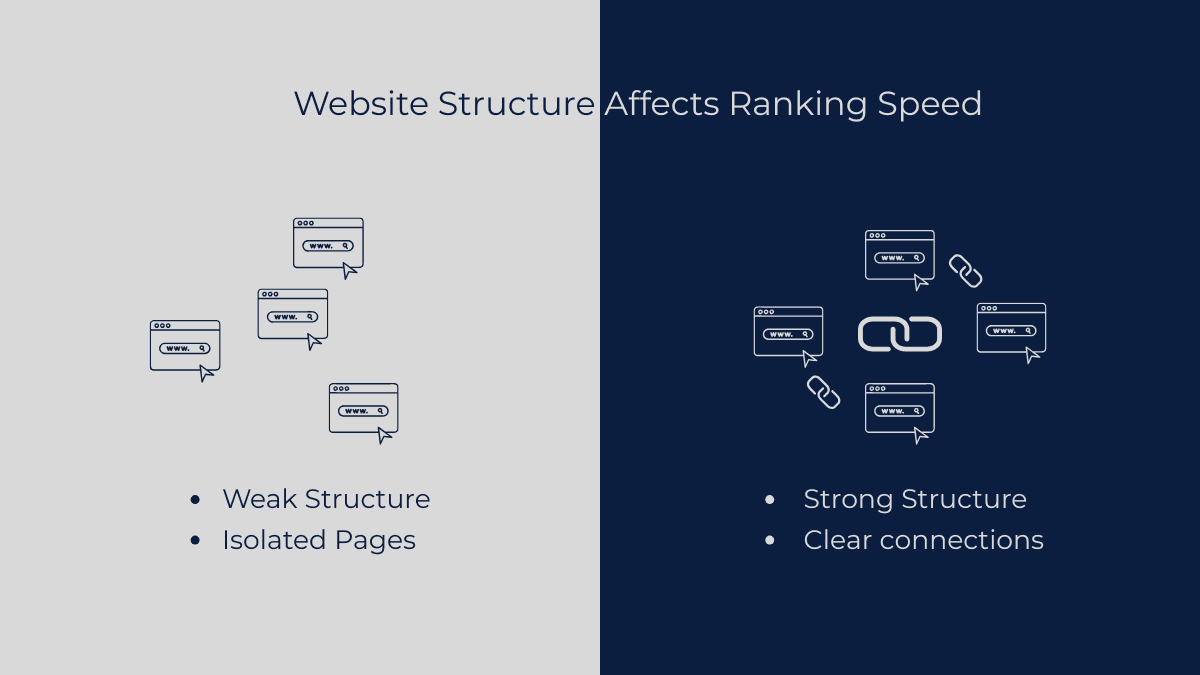
Well-structured websites are easier to understand.
When pages are connected logically through internal links, search engines can follow relationships between topics more efficiently.
This helps reduce confusion and speeds up evaluation.
In simple terms, structure acts like a map. The clearer the map, the easier it is to navigate.
Why Consistency Matters More Than Speed
Many websites try to move faster by doing more in a short time.
However, consistency over time is what builds reliable signals.
Publishing regularly, maintaining structure, and allowing pages to stabilize creates a stronger foundation.
In simple language, steady progress is easier for Google to trust than sudden bursts of activity.
This is also why doing too much too early can slow things down, as I explained in why doing more SEO too early can slow down rankings.
New Website vs Established Website, A Simple Comparison
To make this easier to understand, I often compare two websites targeting similar topics.
One is newly launched. The other has been publishing consistently for a year.
The established site already has:
- Existing content around related topics
- Internal connections between pages
- Historical data from user interactions
The new site is still building all of this.
In simple terms, the established site is being refined, while the new site is still being understood.
Why Patience Still Plays a Central Role
Even when everything is done correctly, SEO still requires time.
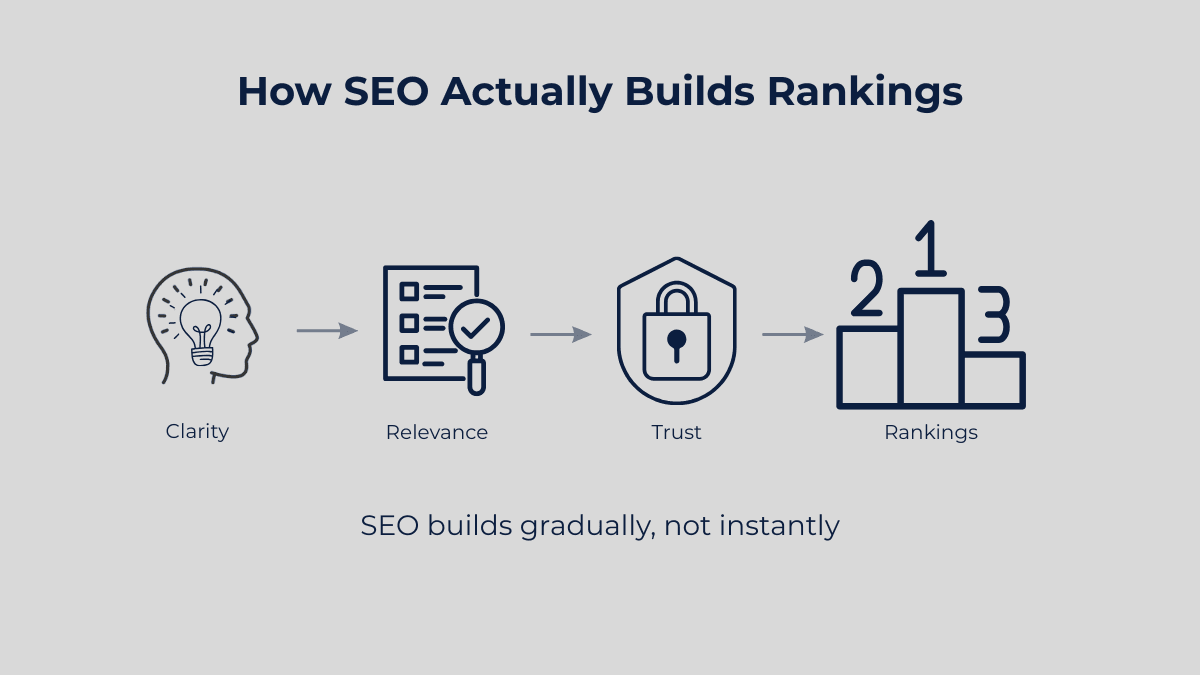
Search engines need repeated signals to confirm relevance, usefulness, and consistency.
This process cannot be rushed.
If you want a clearer idea of how this timeline works, I have explained it in detail in how long SEO takes for a new website.
A Simple Way to Understand Faster Rankings
Websites that rank faster are not necessarily better. They are usually easier to understand.
Clarity, structure, consistency, and existing signals reduce the effort required for search engines to evaluate a site.
In simple language, the easier your website is to understand, the faster it can move.
Final Thoughts
SEO does not move at the same speed for every website because not every website provides the same level of clarity and trust.
Some sites appear to grow faster because they already have structure and signals in place. Others take time because they are still building that foundation.
Search engines are not rewarding speed. They are responding to understanding.
If you are building a new website and want a steady, structured approach instead of rushing results, I also provide SEO services in Haridwar, where I focus on long-term clarity and consistency rather than quick fixes.
When a website becomes easier to understand, rankings tend to follow more naturally.