
Your Website Is Getting Traffic But No Leads. Here Is Why and How to Fix It.
Getting traffic but no leads is one of the most frustrating stages in SEO. Your impressions are growing, your clicks are slowly increasing, and for a moment it feels like real progress is finally happening.
But then reality hits.
No calls. No form submissions. No serious inquiries.
And the question becomes: if people are visiting my website, why is nobody contacting me?
This is one of the biggest misunderstandings in SEO. Traffic alone does not grow a business. Visibility and conversions are two completely different stages, and the gap between them is where most websites quietly struggle.
In many cases, getting traffic without leads is actually a normal part of how SEO evolves, especially for newer websites. But understanding why it happens, and what to do about it, is what separates websites that eventually convert from ones that stay stuck at the traffic stage indefinitely.
I have seen businesses panic too early at this stage. They assume SEO is failing when in reality, Google is still testing relevance, visitors are still evaluating trust, and the website itself may not yet be aligned with buyer intent.
In this blog, I will explain why this happens, what most businesses misunderstand about SEO traffic, and how to approach fixing this problem strategically instead of emotionally.
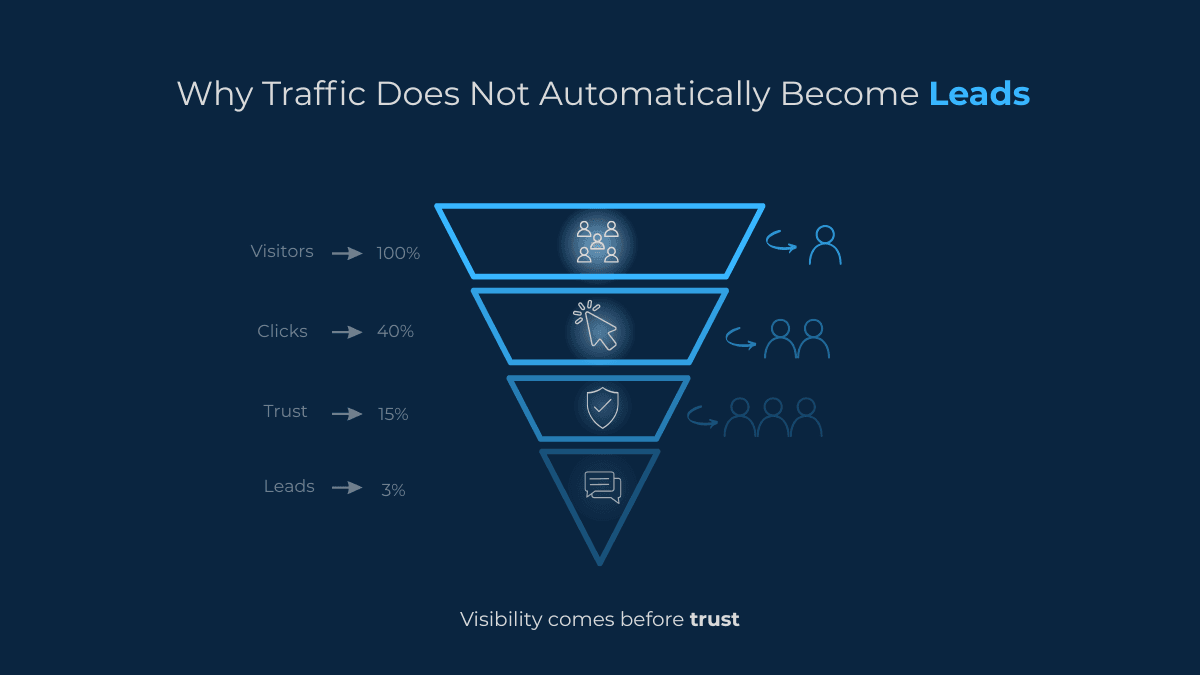
Traffic Without Leads: The Biggest Misunderstanding About SEO Visitors
Most people assume that more traffic automatically means more customers. But SEO does not work that way.
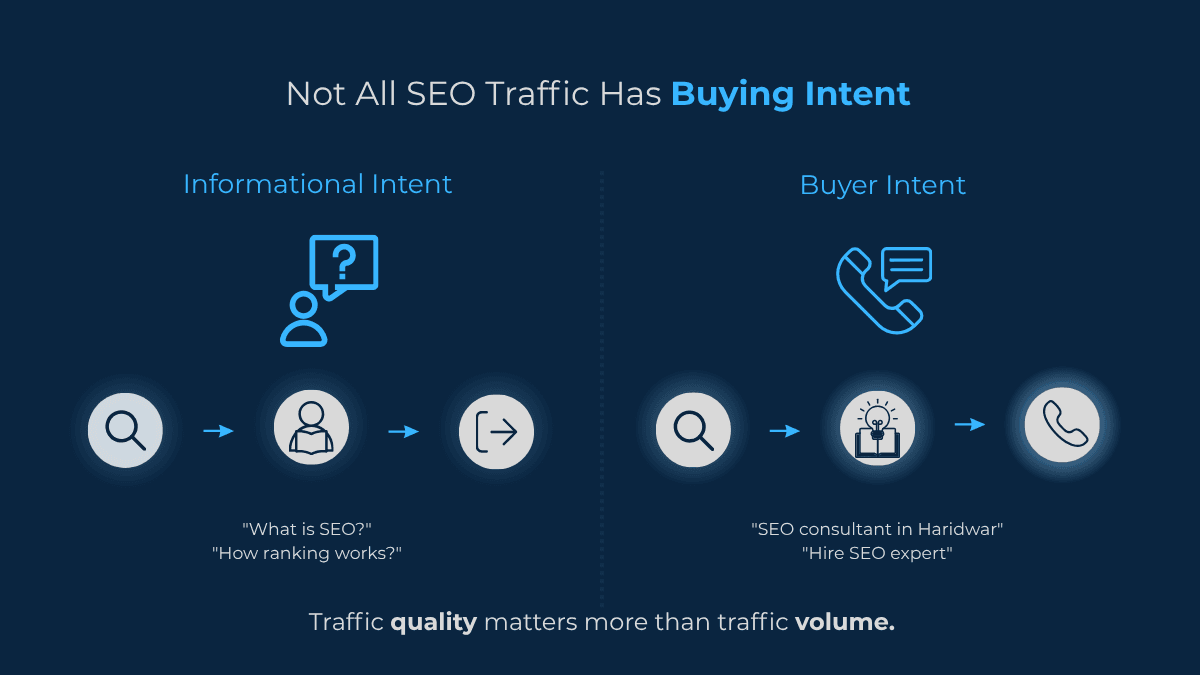
Not every visitor coming to your website is ready to buy. Some are just researching. Some are comparing options. Some are trying to understand a problem for the first time. And some may not even realise they need a service yet.
For example, someone searching:
- “What is SEO?”
- “How does Google ranking work?”
- “Why is my website not ranking?”
is very different from someone searching:
- “SEO consultant in Haridwar”
- “Local SEO services in Dehradun”
- “Hire SEO expert for business website”
One visitor has informational intent. The other has buying intent. And this difference changes everything.
A website can receive thousands of informational visits and still generate very few leads if the audience is not aligned with the actual service being offered. This is why traffic should never be viewed in isolation. The quality and intent behind the traffic matter far more than the numbers themselves.
According to Backlinko’s research on Google CTR and search intent, the vast majority of clicks go to results that most closely match the searcher’s specific intent, not just the most visited pages. Intent alignment is what drives both clicks and conversions.
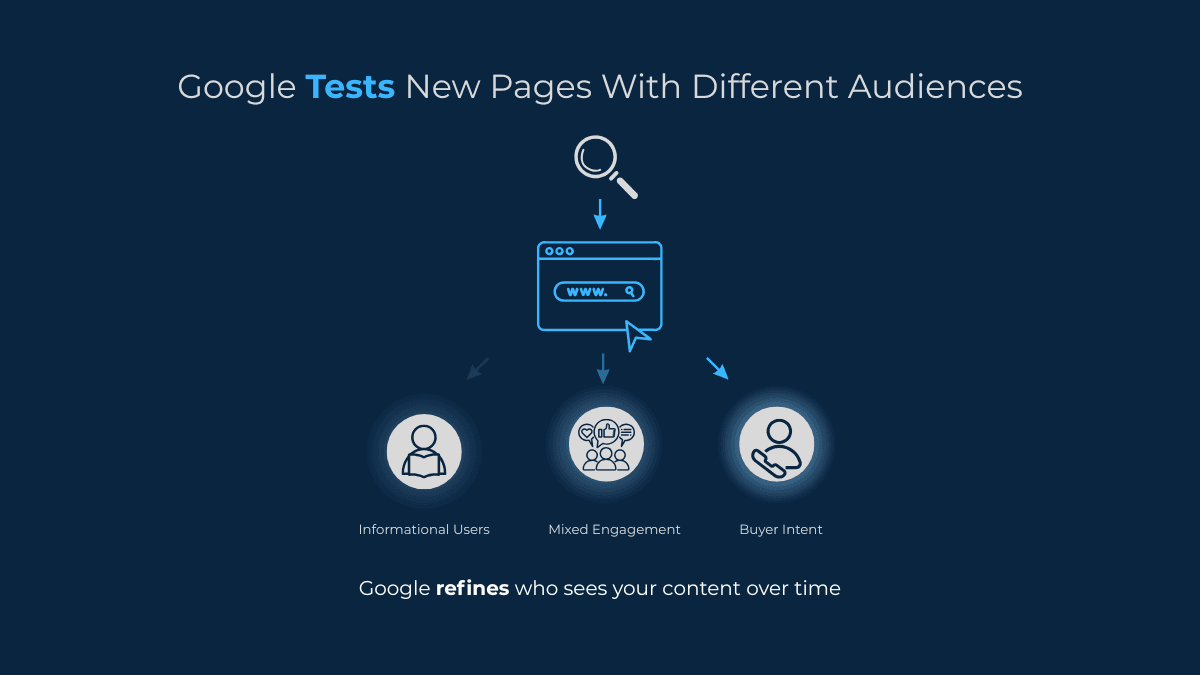
Why New Websites Get Traffic But No Leads in the Early Phase
When a website is still new, Google is often uncertain about where exactly that site belongs in the search ecosystem. So initially, Google tests the website across broader search patterns.
This means early traffic is often inconsistent, low-intent, or exploratory. Google may show your pages for broader informational queries, semi-relevant searches, experimental ranking positions, and low-competition keyword variations that attract researchers rather than buyers.
This testing phase is very similar to what I explained in my blog about why indexed pages still do not rank properly. Google does not instantly trust a new website as an authority. It evaluates content depth, topical consistency, user interaction patterns, engagement signals, and site structure over time.
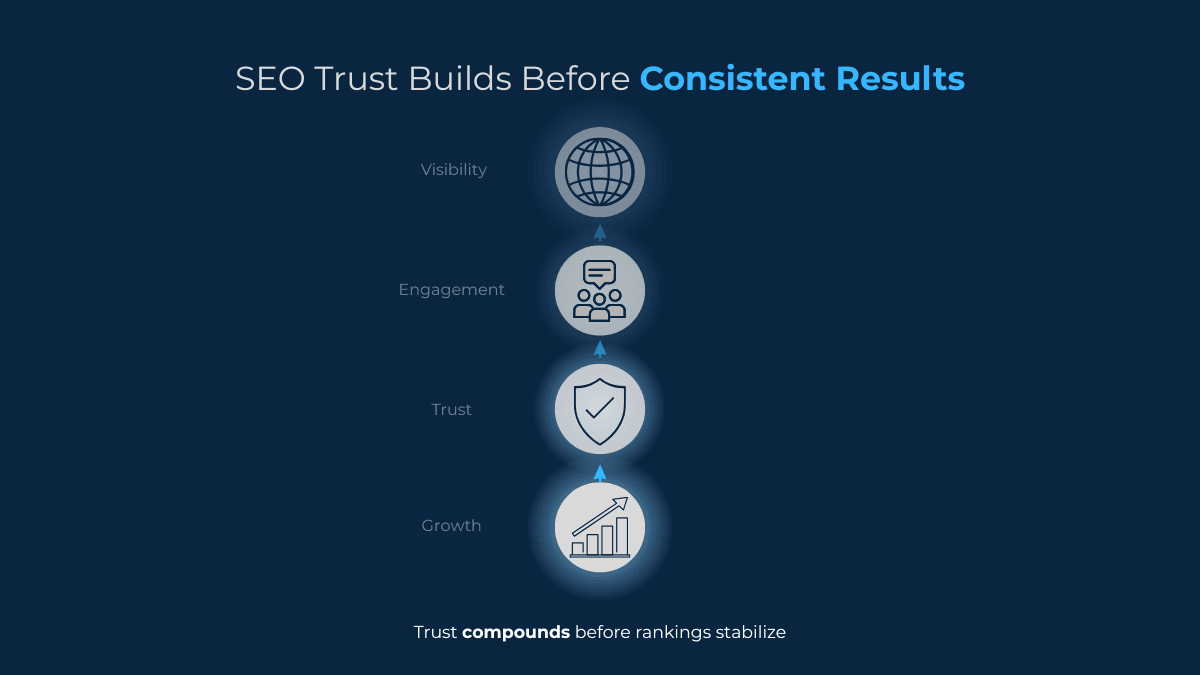
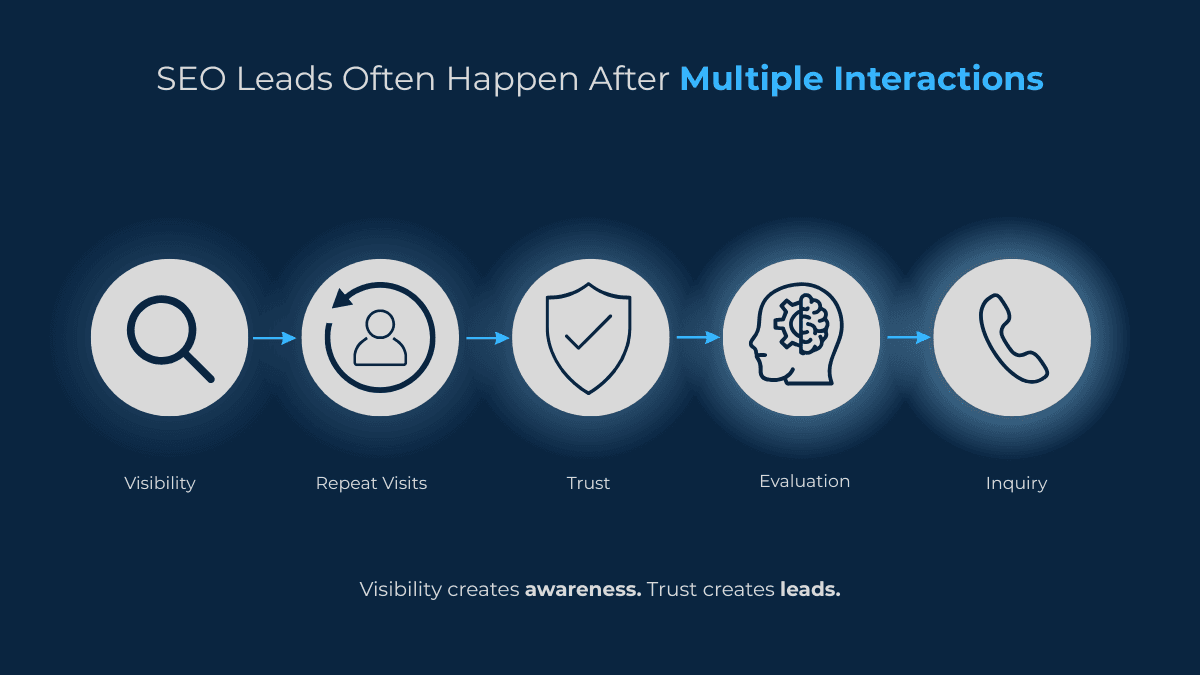
During this period, traffic may increase before conversions improve. And honestly, that is normal. Because visibility almost always comes before trust, and trust almost always comes before leads.
Why Website Traffic Does Not Convert: The Trust Gap Most Businesses Miss
This is where many websites quietly fail. Even if Google starts sending visitors, the website itself may not create enough confidence for someone to take action.
A visitor lands on the page but quickly starts questioning things internally. Does this business actually know what they are doing? Why should I trust them over the other options I found? What makes them different? Do they understand my specific problem? Is this website active and credible?
If the website cannot answer these questions naturally within the first few seconds, people leave. Not because your service is bad, but because the website has not yet built enough of a case for why you are the right choice.
This is why traffic without authority rarely converts well. And authority is not built through aggressive selling or generic promises. It is built through clear positioning, educational depth, consistent topical relevance, trustworthy messaging, good user experience, and a content ecosystem that makes visitors feel they are in the right place.
This is one reason I focus heavily on building interconnected educational blogs on Juyal Digital instead of creating shallow pages filled with generic claims. Because in SEO, trust compounds slowly. A visitor may discover your website today and contact you two months later after repeatedly encountering your content. That delayed conversion behaviour is far more common in service-based businesses than most owners realise.
Wrong Keywords Are Sending the Wrong Visitors: How Keyword Intent Misalignment Kills Conversions
Sometimes the issue is not traffic volume at all. The issue is keyword alignment.
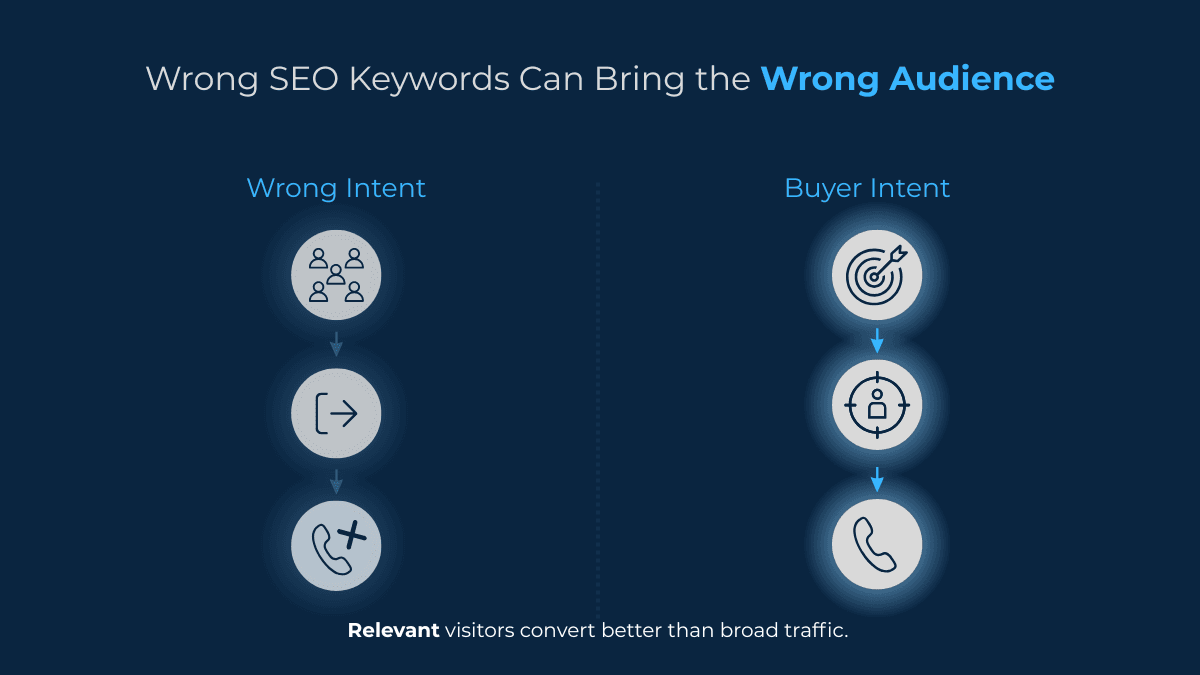
A website may rank for keywords that generate visibility but attract entirely the wrong audience. Broad educational keywords, low-intent informational searches, curiosity-based traffic, and searches from students or learners rather than buyers all create what is sometimes called vanity traffic.
The numbers look impressive on analytics dashboards but the business impact stays weak. The website appears to be performing well because traffic is up, but the underlying quality of that traffic is misaligned with the service being offered.
This is one of the core reasons why businesses should never judge SEO success by traffic screenshots alone. I have seen websites with significantly lower traffic generate far more revenue simply because their traffic quality was stronger and their content was aligned with buyer intent at every stage.
A smaller number of highly relevant visitors who are actively looking for your specific service will always outperform large amounts of disconnected traffic from people who were never likely to convert. Because SEO is not about attracting everyone. It is about attracting the right people at the right stage of their decision.
This is also connected to the keyword strategy I explain in my blog on why some websites rank faster than others. Targeting realistic, intent-matched keywords from the beginning builds a more valuable audience foundation than chasing volume for its own sake.
SEO Is Not Paid Ads: Why Expecting Leads Too Early From SEO Sets Businesses Up for Disappointment
Another major problem is unrealistic expectations about the speed of SEO conversions.
Many businesses expect SEO to behave like paid advertising. They assume that if traffic increases this month, leads should also increase immediately in direct proportion. But SEO does not operate in straight lines, especially for newer websites.
In reality, visitors in service-based industries often go through multiple stages before contacting a business. They discover the brand, read educational content, compare alternatives, revisit the site later, and build familiarity gradually before making any kind of contact.
Someone hiring an SEO consultant, developer, healthcare provider, or any service professional usually does not make that decision instantly. They observe. They compare. They quietly evaluate expertise over multiple visits. And that process takes time, sometimes weeks, sometimes months.
This is also why I explained in my blog about what happens after publishing a blog that SEO growth often looks random in the beginning. Because Google is testing pages while users are simultaneously testing trust. Both processes happen in parallel, and both take time to mature.
How to Fix a Website That Gets Traffic But No Leads
When I analyse websites facing this problem, I do not immediately focus on getting more traffic. Because more traffic is largely wasted if the existing visitors are not converting.
Instead I look at deeper strategic issues first.
Is the website attracting the right search intent or mostly informational traffic? Are the service pages clearly positioned with specific, benefit-driven messaging? Does the website demonstrate genuine expertise or just make generic claims? Is the internal linking structure helping users move naturally from educational content toward service pages? Are visitors actually understanding the value being offered, or is the messaging too vague to create conviction?
Once those questions are answered clearly, the focus shifts to improving topical authority, content relevance, buyer-intent alignment, internal linking structure, service page clarity, and the overall user journey from first visit to contact.
Because SEO conversions improve when the website starts making sense to both Google and users at the same time. Google needs to understand what your website is about and trust it enough to show it for commercial queries. Users need to land on a page that speaks directly to their problem and makes the next step obvious.
When both of those things happen consistently, the gap between traffic and leads starts to close.
If you want to see how this approach works in practice, you can explore my SEO services in Haridwar and SEO services in Dehradun pages to see how I structure local SEO strategy around intent alignment rather than just traffic volume.
Final Thoughts
Getting traffic but no leads can feel discouraging. But in most cases it does not mean SEO is failing. It means the website is somewhere between visibility and trust, and that gap is what needs to be addressed.
Traffic is attention. Leads are trust. And trust is not something you can shortcut.
A website that attracts the right audience, builds authority consistently, aligns content with buyer intent at every stage, and gives visitors a clear reason to reach out will always outperform a website chasing traffic numbers alone.
Because long-term SEO success is not just about getting visitors. It is about becoming the website people eventually feel confident enough to choose.
If you want to understand how Juyal Digital approaches this for local businesses, you can read through my SEO case study to see the full process from building visibility to building trust on a real website.