
Why SEO Results Look Random at First, and How Google Actually Tests New Pages
Many website owners feel confused when they first start SEO. One day, a page shows impressions. The next day, it disappears. Rankings seem unstable, and nothing feels predictable.
This often leads to the belief that SEO is random or unreliable. In reality, what looks random is usually part of how Google evaluates and tests new pages.
Prefer a quick explanation? I’ve explained why SEO feels random at first and how Google tests new pages in the short video below.
Why SEO Feels Confusing in the Beginning
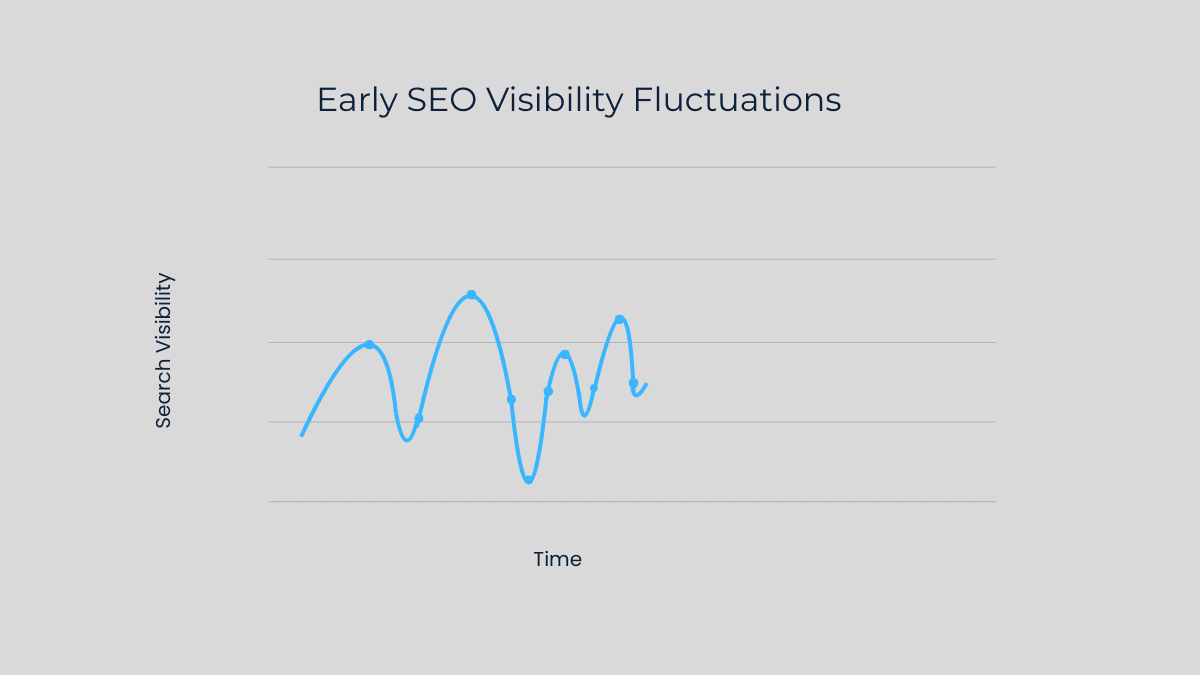
In the early stages, SEO rarely follows a straight line. New pages may appear briefly in search results, receive a few impressions, and then fade away.
This behavior is normal. It does not mean something is broken, and it does not mean your content failed.
In simple terms, SEO feels confusing because Google is still learning how your page fits into the search ecosystem.
Why Early SEO Visibility Looks Inconsistent
When a page is new, Google does not immediately know how users will respond to it. Instead of showing it widely, Google tests it in limited situations.
This can result in short bursts of visibility, followed by periods of silence.
In simple language, Google is experimenting quietly before making bigger decisions.
How Google Actually Tests New Pages
Google tests new pages by showing them to small audiences for specific queries. During this phase, Google observes how the page performs compared to others.
This testing helps Google understand relevance, usefulness, and context.
In simple terms, Google watches first and decides later.
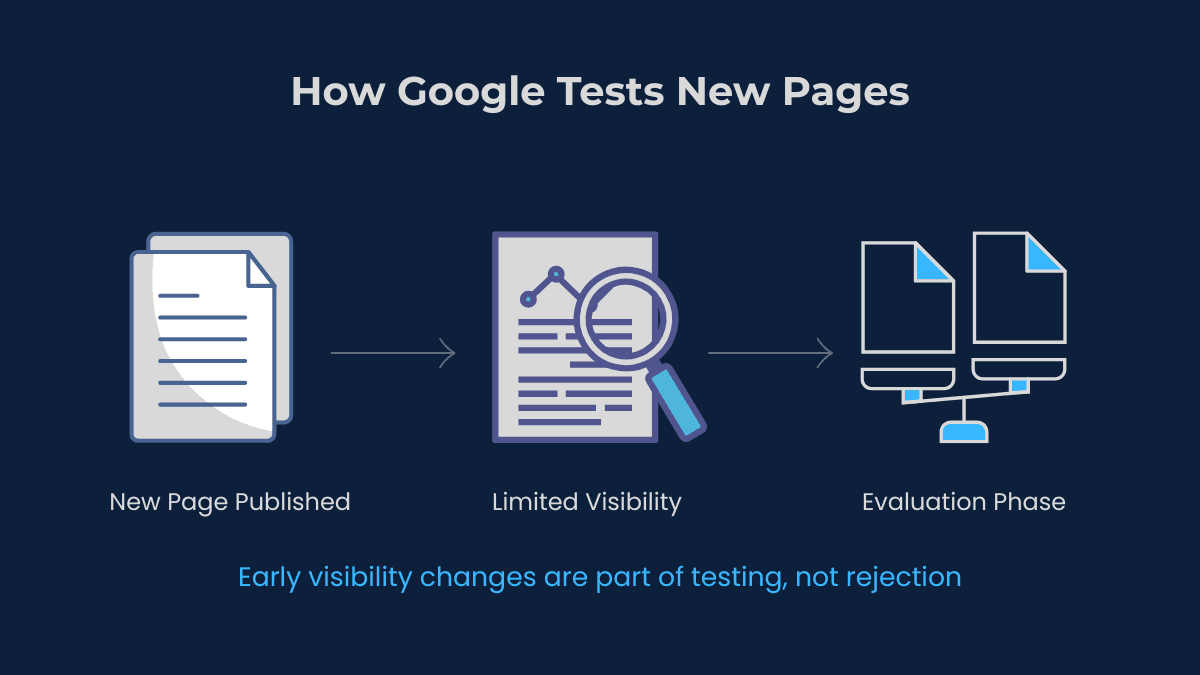
What Google Is Evaluating During This Testing Phase
During early testing, Google looks at several signals. These signals help determine whether a page deserves broader visibility.
- How well the content matches the search query
- Whether the page provides clear and useful information
- How users interact with the page
- How consistent the website appears overall
None of these signals work instantly. They require time and repeated observation.
Why Results Can Appear and Disappear Temporarily
As Google gathers data, it may pull a page back from results to compare it with others. This can make rankings appear and disappear.
This is not a penalty. It is part of evaluation.
In simple terms, temporary visibility changes are signs of testing, not rejection.
How This Testing Phase Relates to Indexing and Ranking
Indexing makes a page eligible to appear in search results. Ranking decides where it belongs.
The testing phase sits between these two steps.
If you want a clearer understanding of this difference, I have explained it in detail in my guide on indexing vs ranking.
Why Patience and Consistency Matter During Testing
Frequent changes during the testing phase can slow down evaluation. When content changes too often, Google cannot collect stable data.
This is why patience matters.
I have explained this timing and progression more clearly in my article on how long SEO takes for a new website.
Common Mistakes People Make at This Stage
Many people react too quickly when they see unstable results.
- Rewriting content repeatedly
- Adding unnecessary keywords
- Checking rankings multiple times a day
- Making decisions without enough data
In simple language, overreaction delays clarity.
When SEO Results Usually Start to Stabilize
Over time, Google collects enough data to make more confident decisions. Visibility becomes steadier, and patterns begin to form.
This does not happen overnight, but it does happen with consistency.
What looks random at first often becomes predictable later.
Final Thoughts
SEO results rarely behave randomly. They only appear that way before enough information is available.
Early fluctuations are often a sign that Google is testing, learning, and comparing.
What looks confusing in the beginning is usually Google doing its job carefully.