
Indexing vs Ranking: Your Page Is in Google’s System, So Why Is It Still Not Showing Up?
If you have ever checked Google Search Console and seen your page marked as indexed and you have ever wondered about the difference between indexing vs ranking in SEO, you are not alone.
Most people assume that once a page is indexed, it should start appearing on Google. When it does not, the confusion sets in fast.
The truth is that indexing and ranking are two separate processes. Understanding the indexing vs ranking or the difference between them is one of the most important things you can learn about how SEO actually works, especially for a new website.
In this blog, I will explain exactly what indexing vs ranking mean, why one does not guarantee the other, and what you can realistically do to move your pages from indexed to actually visible in search results.
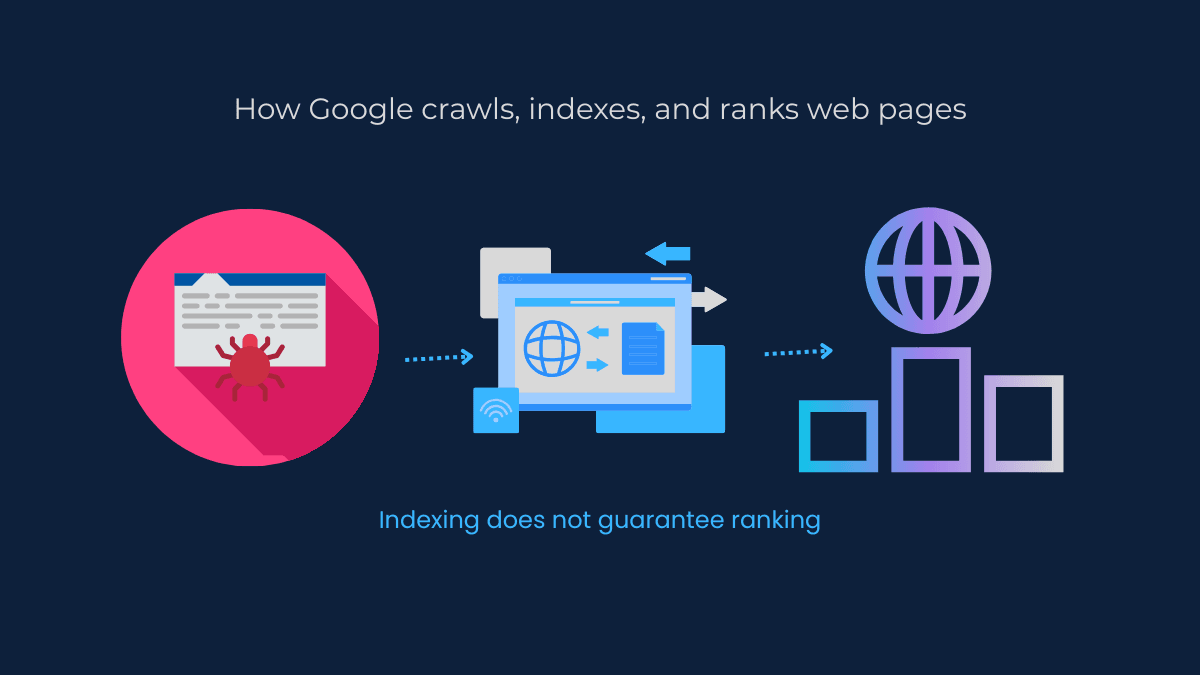
What Indexing Means in the Indexing vs Ranking Process
Indexing means that Google has discovered your page, crawled its content, and stored it in its database. Once a page is indexed, it becomes eligible to appear in search results.
That word eligible is doing a lot of work in that sentence. Eligible means possible, not guaranteed.
Indexing is not a quality assessment. Google does not index a page because it is good. It indexes a page because it could access it, read it, and store it. Thin pages, poorly written pages, and even duplicate pages can get indexed. Indexing simply confirms that Google knows your page exists.
Think of it like submitting a job application. Submitting means your application is in the system. It does not mean you got the job. Ranking is the job offer.
In simple terms, indexing gives your page a place in Google’s system. Ranking gives it a reason to be shown.
What Ranking Actually Means and Why It Is Harder to Earn
Ranking is the process where Google decides which indexed pages should appear for a specific search query, and in what order.
Every time someone searches for something, Google runs a real-time comparison across thousands of indexed pages and selects the ones it believes are most helpful, most relevant, and most trustworthy for that specific query. Your page is competing against every other indexed page targeting the same search.
This is why ranking is significantly harder than indexing. It is not just about being in the system. It is about being better than the alternatives in the system.
According to Google’s own documentation on how search works, ranking involves hundreds of factors evaluated simultaneously, including relevance, content quality, page experience, and the overall trustworthiness of the website. No single factor determines ranking on its own.
In simple language, indexing is entry into the competition. Ranking is winning a position in it.
Why Indexing Always Comes Before Ranking, But Ranking Never Comes Automatically
Google works in a strict sequence. It cannot rank a page it has not yet indexed, and it cannot index a page it has not yet crawled. So the order is always crawling first, then indexing, then ranking.
But just because the sequence exists does not mean every page moves through it at the same speed or even reaches the ranking stage at all.
Many pages get indexed and sit in Google’s database for months without ever ranking for a meaningful query. This happens because Google has indexed the page but has not yet gathered enough confidence to show it consistently to users.
If you want to understand what Google is actually doing during this waiting period, I have explained the full process in detail in what happens after you publish a blog, where I walk through each stage from the moment you hit publish to the point where rankings become stable.
Simply put, Google looks first and decides later. And the deciding part is where most new pages get stuck.
If you prefer a quick visual explanation, I have covered the difference between indexing and ranking in the video below.
Why New Websites Are Indexed Quickly but Rank Slowly
This is one of the most common frustrations I hear from new website owners, and it is something I experienced directly while building Juyal Digital from launch.
New websites usually get indexed relatively quickly once pages are submitted to Google Search Console. But ranking takes significantly longer, and the reason comes down to trust.
Google has no history on a new domain. It has not seen how the site behaves over time, how users interact with it, whether the content consistently answers queries well, or whether the website is a genuine long-term resource. Without that history, Google defaults to caution.
It indexes the pages because it can access them. But it withholds strong ranking positions until it has gathered enough data to feel confident about the site.
If your page is already indexed but still not appearing in search results, I have explained the specific reasons behind this in detail in my blog on why your page is indexed but not ranking, including what Google is evaluating during that gap and what you can do to move it forward.
This is closely connected to the broader pattern I explained in why new websites take time to rank on Google. The indexing and ranking gap is one of the clearest expressions of that trust-building period in action.
In simple terms, Google indexes out of access. It ranks out of confidence. And confidence takes time to build on a new domain.
What Google Is Evaluating Between Indexing and Ranking
The period between a page getting indexed and eventually ranking is not empty waiting. Google is actively gathering signals and making assessments during this time.
Here is what Google is specifically looking at during this evaluation phase:
- Content relevance and depth: Does the page clearly answer the query it is targeting? Does it go beyond surface-level information and provide genuine value?
- Topical consistency of the website: Does the rest of the site support the topic of this page? A page about SEO on a website consistently focused on SEO gets evaluated faster and more favourably than the same page on a scattered website.
- Internal linking structure: Is the page connected to other relevant pages on the site? Isolated pages with no internal links pointing to them are harder for Google to evaluate because there is no context around them.
- User behaviour signals: Once Google begins testing the page for certain queries, it observes whether users click it, how long they stay, and whether they return to the search results immediately. These signals inform whether the page truly satisfies the query.
- Domain trust and history: How established is the domain overall? Newer domains with limited history require more consistent positive signals before Google commits to ranking their pages.
This is why two pages with similar content can get indexed at the same time but rank very differently. The page on the more established, topically focused website will almost always rank faster and higher because Google already has context and confidence around that domain.
The Early Signals That Tell You Indexing Is Turning Into Visibility
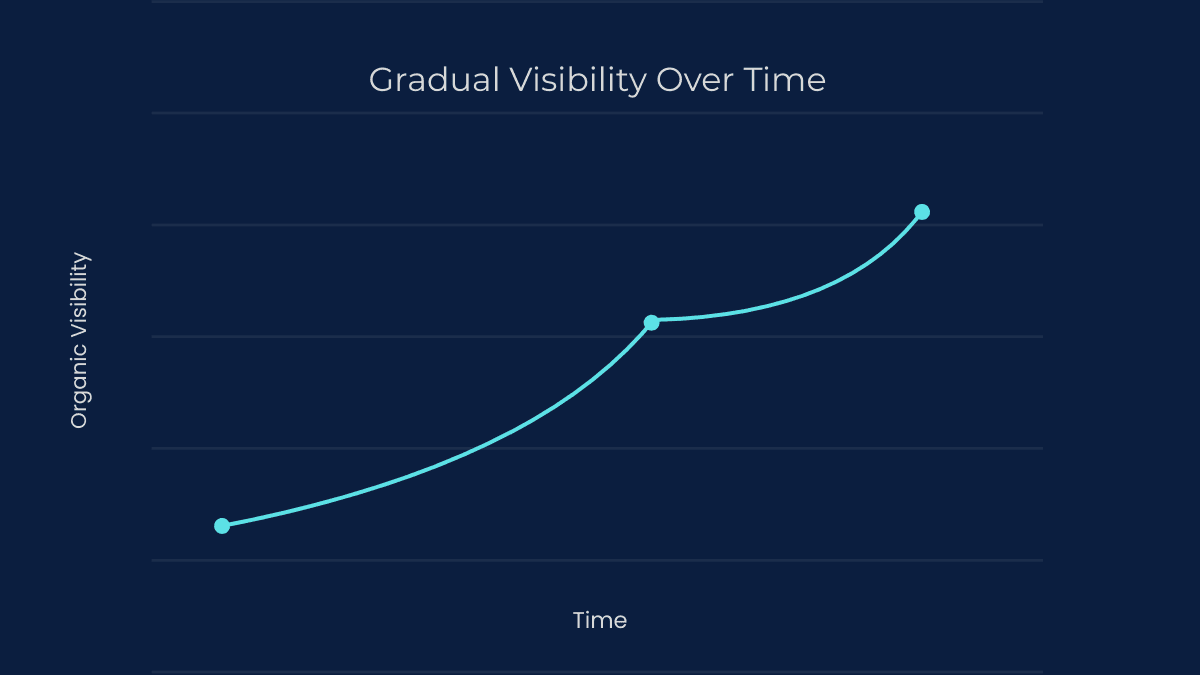
After indexing, progress often appears quietly before it becomes visible in actual rankings. Knowing what to look for helps you understand whether your page is moving in the right direction without obsessing over daily position checks.
- Search impressions start appearing in Google Search Console, even if clicks are still zero
- New search queries begin showing up that the page was not specifically optimised for
- The page starts getting crawled more regularly, which you can observe in the crawl stats section of GSC
- Average position begins appearing in GSC data, even at high numbers like position 40 or 50
These early signals matter. An impression at position 45 might feel irrelevant, but it tells you Google is beginning to associate your page with real queries. That association is what eventually becomes a ranking.
If you are seeing impressions without clicks, that is a normal part of the evaluation phase. I have explained why this happens and what it means in my blog on why SEO results look random at first, which covers the testing and fluctuation behaviour Google uses before settling on stable positions.
What Actually Helps a Page Move From Indexed to Ranked
Moving from indexed to ranked is not about making aggressive changes or constantly tweaking the page. It is about consistently building the conditions that make Google more confident about your page and your website overall.
The most effective things you can do are:
Publish supporting content around the same topic. A single indexed page gives Google one data point. Three or four connected pages covering related aspects of the same subject signal topical depth. That depth builds trust faster than any single page can on its own. This is the topical cluster approach, and it is one of the most reliable ways to accelerate the indexing-to-ranking journey for new websites.
Build internal links from already indexed pages. Every internal link from a page Google already trusts passes some of that credibility to the page it points to. If your indexed page has no internal links coming to it from other pages on your site, it is essentially isolated, and isolated pages rank much more slowly.
Improve the depth and clarity of the page itself. If Google is testing your page and users are not engaging with it, that is a signal to improve the content, not to change the keyword or rewrite the title repeatedly. Deeper, clearer content that genuinely satisfies the query is what earns engagement, and engagement is what accelerates ranking.
Give it time and stability. Consistent structure and content that stays stable over several weeks gives Google a reliable picture to evaluate. Frequent edits reset this process. If you understand how long SEO takes for a new website, the patience required here starts to make much more sense.
Common Mistakes Website Owners Make After Seeing Pages Indexed
The gap between indexing and ranking is uncomfortable. It is natural to want to do something to speed it up. But the most common reactions to this discomfort are also the ones most likely to slow things down further.
Rewriting the page content repeatedly is one of the biggest mistakes. Every significant rewrite effectively asks Google to start its evaluation of that page over again. The data it had collected about how users interacted with the original version becomes less relevant.
Changing the target keyword or title frequently is another common mistake. Each change shifts what Google is trying to rank the page for, creating inconsistency in the signals it is receiving.
Over-optimising the page by stuffing keywords into every paragraph or forcing unnatural internal links is a third pattern I see regularly. This creates a page that looks optimised but reads poorly, and poor user experience is reflected in the behaviour signals Google collects during testing.
There is also a subtler mistake that is worth mentioning. Many website owners focus entirely on the indexed page and ignore the content around it. They forget that Google evaluates a page in the context of the whole website. Improving the ecosystem around a page often does more for its ranking than changing the page itself.
I covered this specific behaviour pattern in more detail in why doing more SEO too early can slow your rankings, where I explain why reactive SEO decisions in the early phase often create more confusion for Google than consistency would.
When Indexing and Ranking Happen Close Together
It is worth understanding when the gap between indexing and ranking is small, because this gives you a clear picture of what to aim for as your website matures.
For established websites with strong domain trust, Google often ranks new pages within days of indexing them. This happens because Google already has years of positive signals from that domain. It knows the content quality is consistently high, the site structure is reliable, and user engagement is strong. So when a new page appears, Google can make a confident ranking decision quickly.
For branded searches on any website, indexing and ranking often align quickly too. If someone searches for your exact business name, Google will show your website almost immediately once it is indexed because the match between query and page is unambiguous.
For new websites targeting competitive non-branded queries, the gap is almost always significant. And understanding that this is normal, not a sign of failure, is what keeps your SEO strategy on track during the early months.
This is also one of the core reasons some websites rank faster than others. It is not just about content quality. It is about the accumulated trust signals that allow Google to make confident ranking decisions quickly.
A Real Example From Building Juyal Digital
When I launched Juyal Digital in November 2025, the first pages got indexed within a few days of submitting the sitemap to Google Search Console.
But impressions took weeks to appear, and stable rankings took longer still. The indexing happened quickly because the site was technically clean, the sitemap was submitted correctly, and the pages were internally linked from the start.
The ranking, however, required Google to see consistent publishing, topical focus, and early engagement signals before it started showing pages for real queries.
By month four, several pages were appearing in Search Console for queries I had not specifically optimised for. That keyword spread is a sign that Google had moved beyond just indexing the pages and had started building a more confident understanding of what the site is about.
You can see the full progression documented in my SEO case study, where I have tracked every stage from launch to current results with real data from Google Search Console.
Final Thoughts
Indexing is progress. It is a genuine step forward and worth acknowledging.
But it is not the finish line. It is the starting line for the ranking process.
Ranking follows once Google has gathered enough confidence in your content, your website structure, your topical focus, and the behaviour of users who land on your pages. That confidence is not instant. It is built through consistency, patience, and a clear understanding of what Google is actually looking for.
Indexing tells you Google is watching. Ranking tells you Google trusts.
And trust, in SEO as in most things, takes time to earn properly.