
Why New Websites Take Time to Rank on Google, And What You Should Do Instead
One of the most common questions from new website owners is this: why my new website is not showing up on Google yet?
The honest answer is that new websites take time to rank, and that is not a flaw in the system. It is how Google is designed to work. Google does not show websites it has not yet evaluated, and evaluation takes time, consistency, and clear signals.
Understanding why this happens, and what you can do about it, changes how you approach SEO from the very beginning.
Why New Websites Take Time to Rank: Google Has to Build Trust First
Google does not hold back new websites without reason. It evaluates them carefully before deciding to show them in search results.
When a new website launches, Google has no history to rely on. It has not seen how the site behaves over time, whether the content is consistent, whether users find it useful, or whether the website is genuine. So instead of immediately ranking new pages, Google observes first.
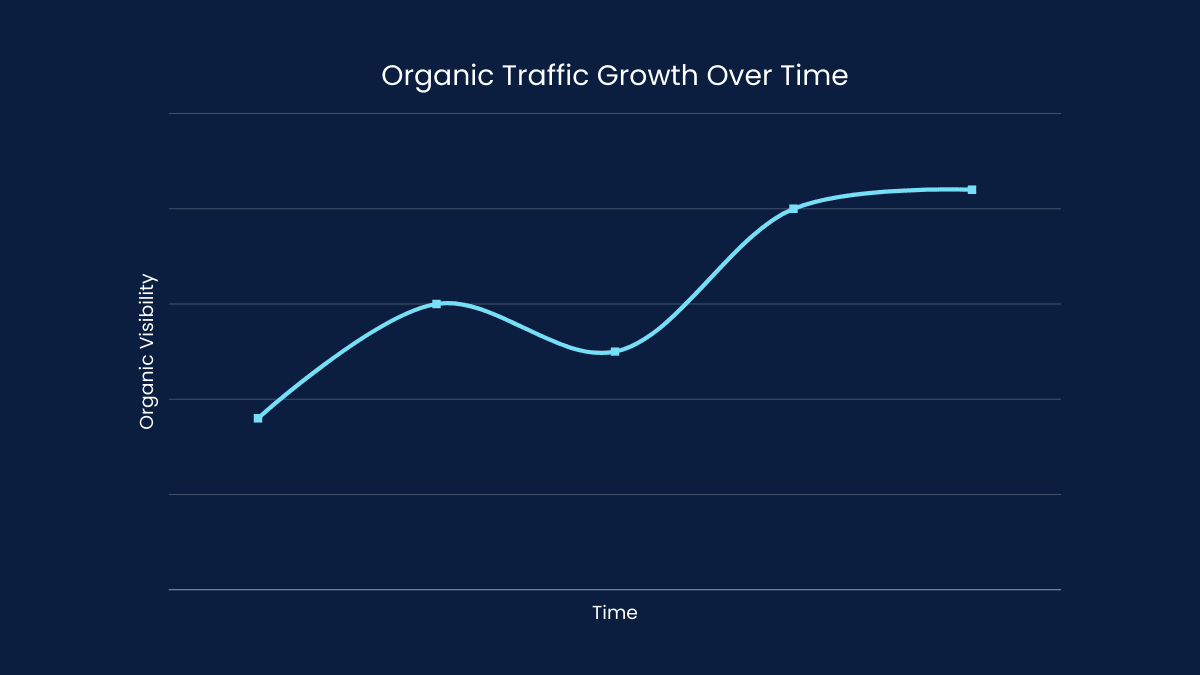
This observation period is sometimes called the Google Sandbox, an informal term used to describe the phase where new websites are evaluated before gaining stable rankings. During this phase, your pages may get indexed but show very little visibility in search results.
According to Ahrefs research on the Google Sandbox effect, new domains typically need several months of consistent activity before Google begins showing them for competitive queries. This is not a punishment. It is simply how trust is built in Google’s system.
In simple terms, Google does not trust a new website yet. Just like people, Google takes time to understand whether a site is genuine, useful, and consistent before giving it visibility.
What Google Actually Looks for in a New Website
Understanding what Google evaluates helps you focus on the right things instead of wasting time on tactics that do not move the needle early on.
Content Signals
Google checks whether your content genuinely helps users and whether the quality remains consistent over time. This is not just about word count or keywords. It is about whether your page clearly answers the question someone is searching for, without padding, without copied content, and without generic filler.
A new website that publishes focused, useful content consistently over several months sends a very different signal than one that publishes twenty thin pages in the first week and then goes quiet.
In simple terms, write content that genuinely helps your audience. Google notices consistency far more than volume.
Website Structure and Technical Clarity
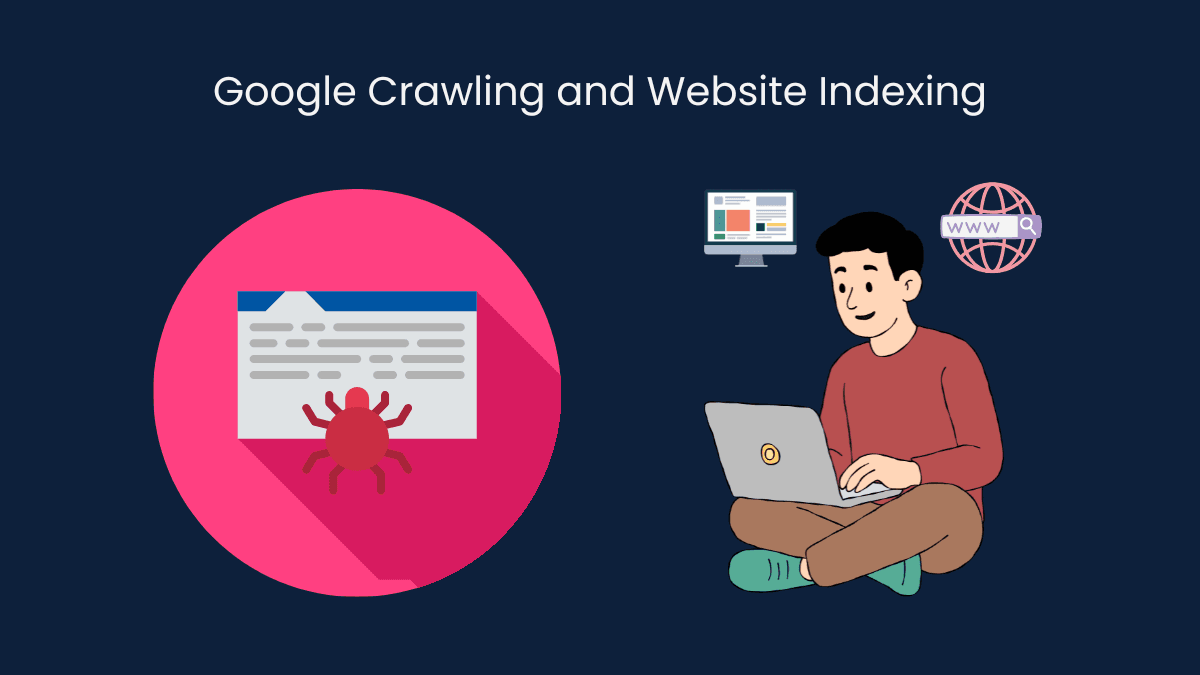
Google evaluates how your website is structured, how pages are connected to each other, and how easily its crawler can move through the site. A website with a clear hierarchy, proper internal linking, and a submitted sitemap gives Google a much cleaner picture of what the site is about and which pages matter most.
Poor technical structure, broken links, missing sitemaps, or pages with no internal links pointing to them slows down Google’s ability to understand your site. And a site Google struggles to understand is a site Google will not rank confidently.
In simple terms, if your website is easy to navigate and pages are properly linked, Google can understand your content faster and rank it more accurately.
Early User Behaviour
Even in the early stages, Google observes how real users interact with your website. This includes how long they stay on a page, whether they explore other pages on the site, and whether they go back to the search results immediately after landing, which signals that the page did not satisfy their query.
This is one reason why content quality matters beyond just getting indexed. A page that users engage with genuinely sends positive signals that build trust faster than a technically optimised page that users immediately leave.
In simple language, if real people spend time on your site instead of leaving immediately, Google sees that as a strong positive signal worth rewarding over time.
Why Indexing Does Not Mean Ranking
Many new website owners check Google Search Console, see their pages indexed, and expect rankings to follow quickly. When they do not, the confusion sets in.
Indexing and ranking are two completely separate things. Indexing simply means Google has stored your page in its database and it is eligible to appear in search results. Ranking means Google has enough confidence in your page to show it consistently for specific queries.
The gap between indexing and ranking is where most new websites get stuck. Google may test your page occasionally, showing it to a small number of users to observe behaviour, but it will not commit to a stable ranking until it has gathered enough consistent signals.
I have explained this distinction in more detail in my blog on indexing vs ranking, and also in what happens after you publish a blog where I walk through the full process Google runs after a page goes live.
In simple terms, your page being visible in Google’s index does not mean it is ready to compete yet. That confidence has to be earned.
Common Mistakes That Slow Down New Websites Even Further
New website owners often unknowingly slow their own progress by doing things that seem logical but actually create confusion for Google.
- Publishing too many low quality pages quickly: Volume without quality dilutes your site’s credibility in Google’s eyes. Ten focused, useful pages outperform fifty thin ones every time.
- Frequently changing site structure or URLs: Every structural change forces Google to re-evaluate what it already understood about your site. Stability helps Google build a clearer picture over time.
- Chasing backlinks before content is solid: Links to thin or unhelpful content do very little. Strong content earns links naturally and benefits from them far more when the foundation is already solid.
- Expecting rankings within a few weeks: Unrealistic timelines lead to reactive decisions. Changing strategy too quickly is one of the most common reasons new websites stall.
- Over-optimising early pages: Keyword stuffing, forced internal links, and unnatural content structures can confuse Google rather than help it. Clean, natural content works better in the early phase.
One specific mistake that belongs in this category is copying competitor keywords too early. Many new website owners assume that targeting the same keywords as established competitors is the fastest path to visibility. In practice, it often produces the opposite result, because Google already has years of trust built around those established sites and has very little reason to replace them with a newer, unproven domain targeting identical terms. I have explained exactly why this happens and what works better in my blog on why copying competitor keywords is the slowest way to rank.
These actions create instability instead of consistency, and consistency is exactly what Google needs to build trust in a new website.
What You Should Focus on Instead
Publish Helpful and Focused Content Consistently
Google understands websites better when content stays focused around clear topics. A website that consistently publishes content in one subject area builds topical authority much faster than one that covers unrelated topics randomly.
For a new website, this means picking a focused content direction and sticking to it. Each new page should deepen Google’s understanding of what your website is about, not broaden it in ways that create confusion.
In simple terms, write content that genuinely helps your audience and keeps building on the same topical foundation rather than jumping between topics.
Build Internal Links Naturally and Strategically
Internal links are one of the most underused tools in SEO for new websites. Every internal link from one page to another tells Google how your content is connected and which pages carry the most importance on your site.
For a new website with limited pages, internal linking is especially powerful because it concentrates whatever authority your domain is building into the pages that matter most. A service page supported by three internally linked blog posts is far easier for Google to evaluate than a service page that stands alone.
In simple words, link your related pages to each other consistently. It makes your website easier to explore for both users and search engines, and it signals structure and depth to Google.
This is a core part of how I approach SEO for local businesses. You can see this in practice through my SEO services in Haridwar and SEO services in Dehradun pages, where structured internal linking forms the foundation of the local SEO strategy.
Be Consistent, Not Aggressive
Google values consistency more than speed. A website that publishes one genuinely useful piece of content every week for six months will almost always outperform a website that publishes twenty pages in the first month and then goes quiet.
Consistency tells Google that the website is active, maintained, and worth returning to crawl regularly. It increases crawl frequency over time, which means new pages get discovered and evaluated faster as the site matures.
Simply put, steady and sustainable always wins over fast and scattered in SEO.
How Long Does It Usually Take for a New Website to Rank
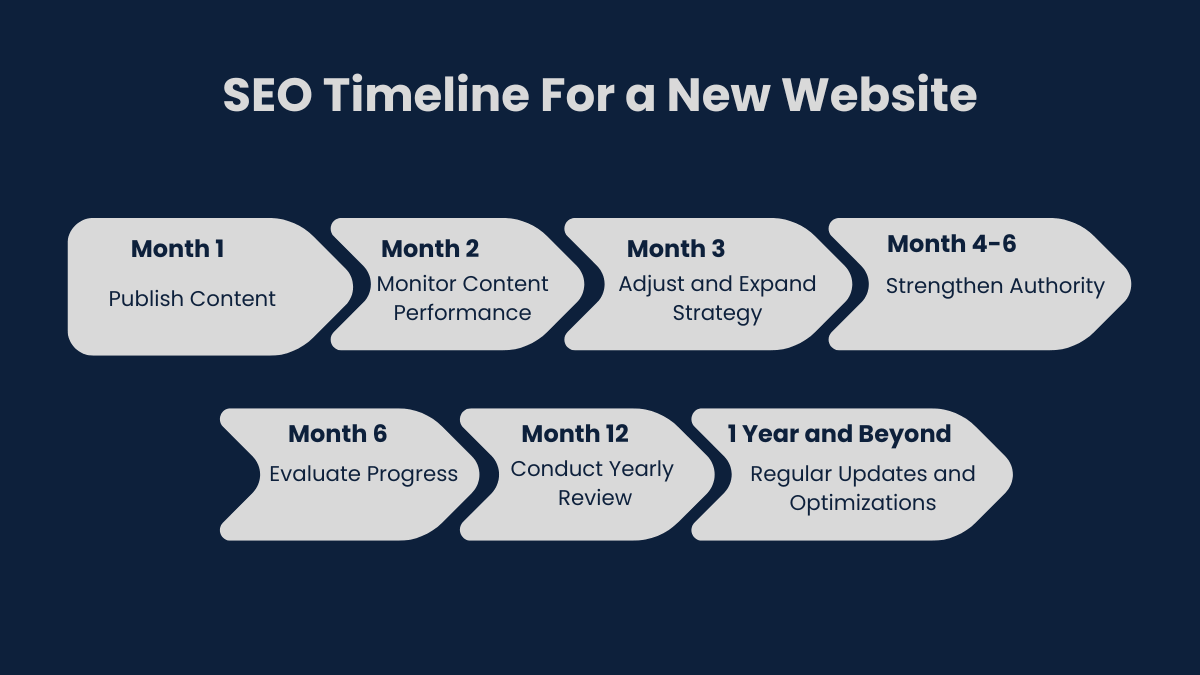
There is no fixed timeline, but most well-built new websites begin seeing stable impressions and gradual ranking growth within three to six months when the fundamentals are consistently applied.
The key factors that influence this timeline are domain age, content quality and consistency, internal linking structure, and whether the website targets realistic keyword difficulty for its current authority level.
New websites that target long-tail, low-competition keywords in the early phase tend to gain visibility faster than those chasing broad competitive terms from day one. Building from smaller wins creates momentum that makes larger rankings achievable later.
If your website is new and impressions feel slow or inconsistent, understanding why SEO results look random at first can help frame what is actually happening behind the scenes.
In simple terms, SEO is not instant, but it is predictable when the fundamentals are right and consistently maintained.
Final Thoughts
Google is not against new websites. It is careful with them.
The reason new websites take time to rank is not a flaw or a penalty. It is Google doing exactly what it is supposed to do: evaluating websites carefully before showing them to users who trust its results.
Trust is not requested. It is earned through clarity, consistency, and patience. When you focus on building a site that genuinely helps users, with focused content, clean structure, and natural internal linking, rankings follow as a natural result of that foundation.
This is the approach I apply at Juyal Digital, both on this site and in how I help local businesses grow their online visibility. If you want to understand what a structured SEO approach looks like in practice, you can explore my ethical SEO consulting services or read through my SEO case study to see how this process works on a real website from launch.